
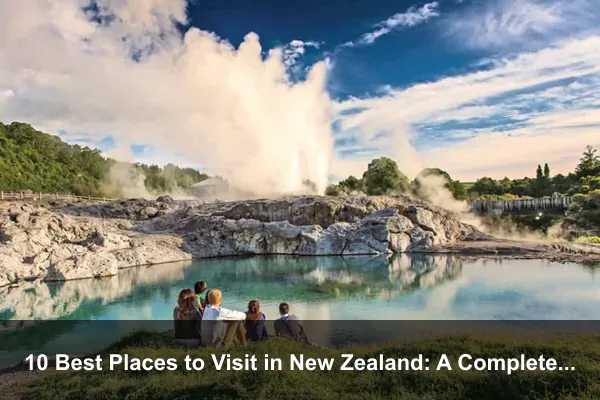
New Zealand packs extraordinary variety into a manageable map: volcanic plateaus, Maori cultural centers, alpine ranges, fiords, and sophisticated food cities spread across two islands. Instead of trying to see everything, this plan helps you choose high-impact places that represent the country’s biggest landscapes and experiences without wasting travel days.
The guide is structured for practical trip-building, with each stop including who it suits, when to go, and how to reach it. Use it to design a first visit that balances iconic highlights with smart routing between the North and South Islands.
Auckland Waterfront and Waiheke Island

Auckland’s waterfront is ideal for first-time New Zealand visitors who want great food and a clear city-to-island contrast in one easy trip. Start in the Viaduct and Wynyard Quarter for harbor walks, seafood, and outdoor dining, then ride a 35-40 minute ferry to Waiheke Island for vineyard tastings, olive groves, and beaches like Oneroa. Located in Auckland on the North Island, this pairing is best from November to April, when warm weather makes al fresco meals and coastal swims especially enjoyable. Fly into Auckland Airport, and use an AT HOP card for buses, trains, and ferries to keep transport simple between downtown and the island.
| Best for | First-time visitors, food, and city-to-island contrast |
|---|---|
| Location | Auckland, North Island |
| Best time | November-April for warm weather and outdoor dining |
| Access | Fly into Auckland Airport; 35-40 min ferry to Waiheke |
Additional Info: Use an AT HOP card for buses, trains, and ferries to simplify transport.
Rotorua Geothermal Parks and Maori Cultural Experiences

Rotorua, in the Bay of Plenty on New Zealand’s North Island, is best for travelers seeking geothermal landscapes and living Maori culture in one place. Spend your day among steaming vents, bright mineral terraces, and bubbling mud pools in geothermal parks, then switch pace at night with a traditional hangi dinner and kapa haka performance. For a deeper, more local perspective, book evening cultural programs with iwi-led operators. Rotorua is easy to access, either by domestic flight or a roughly 3-hour drive from Auckland, and it is rewarding year-round, with May to September usually bringing fewer crowds.
| Best for | Geothermal landscapes and living Maori culture |
|---|---|
| Location | Bay of Plenty, North Island |
| Best time | Year-round; May-September has fewer crowds |
| Access | 3 hr drive from Auckland or domestic flight to Rotorua |
Additional Info: Book evening cultural programs with iwi-led operators for a stronger local perspective.
Waitomo Glowworm Caves
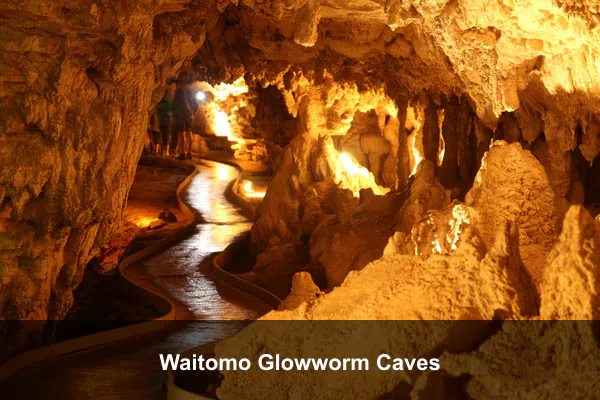
In Waitomo, Waikato on New Zealand’s North Island, the Waitomo Glowworm Caves are a magical stop for families, cave tours, and short detours: drift silently by boat along an underground river while thousands of blue-green glowworms shimmer overhead like a living night sky. Most visits pair the signature glowworm cruise with limestone chambers, cathedral-like acoustics, and easy guided walks, making it memorable without taking a full day. For the smoothest self-drive conditions, plan between October and April; Waitomo is about a 2.5-hour drive from Auckland, and tours depart from Waitomo village. Bring a light layer, as cave temperatures stay cool even in midsummer.
| Best for | Families, cave tours, and short detours |
|---|---|
| Location | Waitomo, Waikato, North Island |
| Best time | October-April for drier driving conditions |
| Access | 2.5 hr drive from Auckland; tours depart from Waitomo village |
Additional Info: Bring a light layer because cave temperatures stay cool even in midsummer.
Tongariro Alpine Crossing

The Tongariro Alpine Crossing in Tongariro National Park, in New Zealand’s central North Island, is one of the world’s classic day hikes, ideal for strong hikers seeking dramatic volcanic scenery. In a single full-day trek, you’ll pass steaming vents, ancient lava terrain, and high ridgelines with striking views over emerald crater lakes and surrounding peaks. For the safest trail window, plan your visit between December and March, when summer conditions are generally more stable. Access is easiest by shuttle services from National Park Village or Taupo, and booking your shuttle first is crucial because trailhead parking has strict time limits and fills early.
| Best for | Strong day hikers and volcanic scenery |
|---|---|
| Location | Tongariro National Park, central North Island |
| Best time | December-March for the safest summer trail window |
| Access | Shuttle services from National Park Village and Taupo |
Additional Info: Secure your shuttle first, since trailhead parking has time limits and fills early.
Wellington City and Te Papa
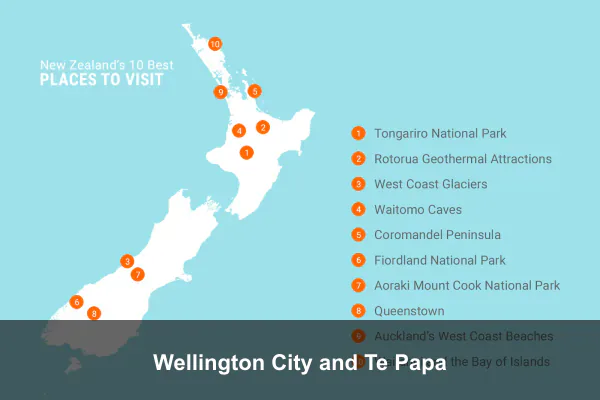
Wellington, on the southern North Island, is ideal for culture-rich, food-focused city breaks that still work in changeable weather: spend a morning inside Te Papa Tongarewa’s world-class galleries, then hop between Cuba Street cafes and waterfront bars before a breezy harbor walk to Oriental Bay. The city’s compact center makes it easy to pair museum time with coffee roastery stops, indie bookstores, and evening dining in one day. Visit from November to March for milder days and a fuller calendar of festivals and events. Fly directly into Wellington Airport, or arrive by ferry from Picton, and reserve Te Papa special exhibitions online early, especially for weekends when entry slots can sell out.
| Best for | Culture, food, and weather-flexible city breaks |
|---|---|
| Location | Wellington, southern North Island |
| Best time | November-March for milder days and events |
| Access | Fly into Wellington Airport or ferry from Picton |
Additional Info: Reserve Te Papa special exhibitions online because weekend entry slots can sell out.
Abel Tasman Coast Track and Kayaking
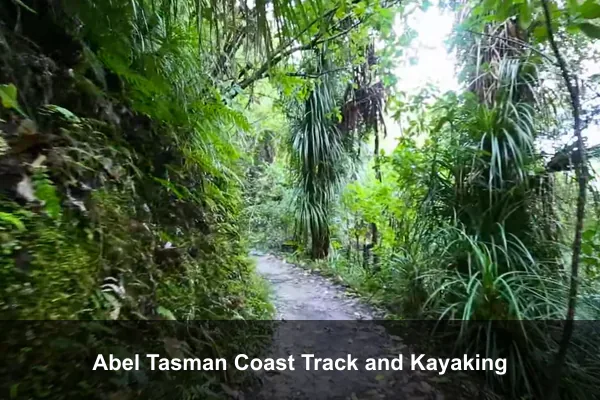
In Nelson-Tasman on the northern South Island, the Abel Tasman Coast Track is ideal for soft adventure and beach-hopping, with honey-gold coves, clear water, and easy options to shape your trip. Hike the coastal trail over several days, paddle between sheltered bays by kayak, or use water taxis to hop on and off beaches for shorter walks and swims. The best conditions are usually December to April, when seas are calmer and swimming is warmest. Access is straightforward: drive to Marahau or Kaiteriteri, then connect by boat. Pack a dry bag—many landings are wet-foot drop-offs straight onto the sand.
| Best for | Soft adventure and beach-hopping |
|---|---|
| Location | Nelson-Tasman, northern South Island |
| Best time | December-April for swimming and calmer seas |
| Access | Drive to Marahau or Kaiteriteri; water taxis link beaches |
Additional Info: Carry a dry bag since many beach landings are wet-foot drop-offs from boats.
Franz Josef Glacier and West Coast Rainforest
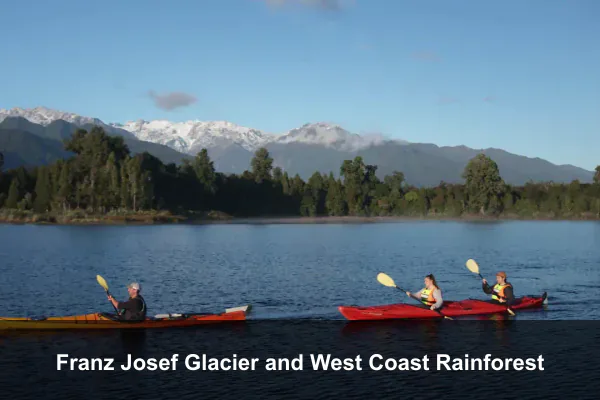
Franz Josef Glacier in Westland Tai Poutini National Park on New Zealand’s South Island is a standout for ice-and-forest contrasts, where glacier viewpoints and lush rainforest walks sit minutes apart on the wild West Coast. Come for the surreal mix of blue ice, mossy trails, and scenic flights that reveal the glacier, mountains, and coastline in one sweep. Between November and March, longer daylight makes it easier to combine short forest tracks with afternoon glacier viewing. Access is by road, usually a 5-6 hour drive from Queenstown or along Christchurch routes, so plan travel days carefully. Most importantly, keep a buffer day in your itinerary, since heli-hike departures are frequently weather dependent.
| Best for | Ice-and-forest contrasts and scenic flights |
|---|---|
| Location | Westland Tai Poutini National Park, South Island |
| Best time | November-March for longer daylight |
| Access | 5-6 hr drive from Queenstown or Christchurch routes |
Additional Info: Keep a buffer day because heli-hike departures are frequently weather dependent.
Queenstown and Gibbston Valley
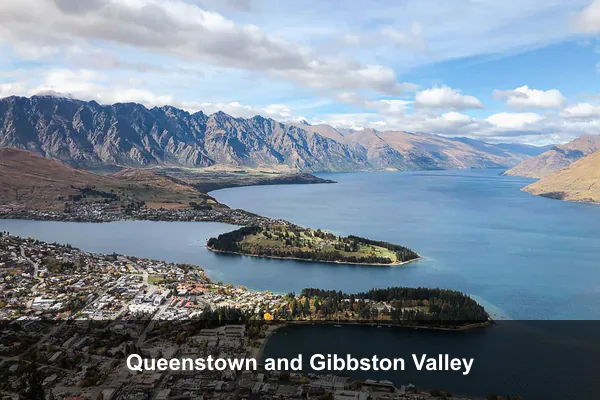
Queenstown and nearby Gibbston Valley in Otago, South Island, are ideal for adventure lovers and couples on a short break: spend mornings on jet boating, bungy jumps, or mountain trails, then slow down with Pinot Noir tastings among vineyard views framed by alpine peaks and Lake Wakatipu. The area works year-round, with June to August best for ski trips at nearby resorts, while spring to autumn suits hiking and cycling the Gibbston wine trail. Practical access is easy via direct flights into Queenstown Airport, with frequent buses into town. In peak months, pre-book headline activities and cellar-door slots, and keep one flexible day in your itinerary so weather shifts do not disrupt your top experiences.
| Best for | Adventure sports, couples, and short breaks |
|---|---|
| Location | Otago, South Island |
| Best time | Year-round; June-August for ski season |
| Access | Direct flights to Queenstown Airport; buses into town |
Additional Info: Pre-book headline activities in peak months, then leave one flexible weather day.
Milford Sound in Fiordland
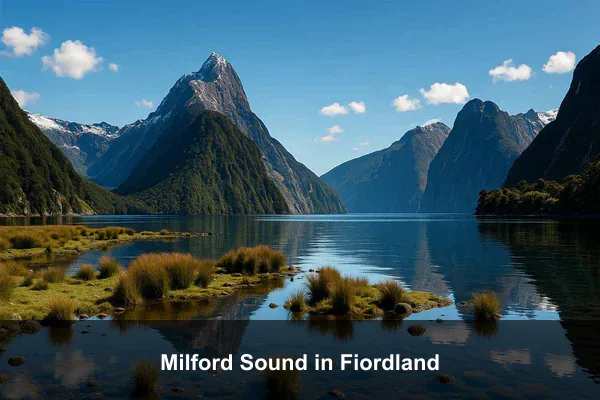
Milford Sound, in Fiordland National Park on New Zealand’s South Island, is one of the country’s most iconic places for scenery and photography, with sheer cliffs, hanging waterfalls, and mirror-like water framed by rainforest and peaks. A cruise is the essential experience, carrying you through dramatic fiords from dawn to dusk for constantly changing light and unforgettable views. For the best conditions, choose the first cruise of the day, when crowds are lighter and the water is usually calmer. Visit from October to April for long daylight hours, or come in winter for striking snow-capped mountains. Access is straightforward by coach or self-drive from Te Anau or Queenstown, and scenic flights are a spectacular optional upgrade.
| Best for | Iconic scenery and photography |
|---|---|
| Location | Fiordland National Park, South Island |
| Best time | October-April for long days; winter for snow-capped peaks |
| Access | Coach or self-drive from Te Anau/Queenstown; scenic flights optional |
Additional Info: Choose the first cruise of the day for lighter crowds and calmer water.
Aoraki/Mount Cook and Dark Sky Experiences
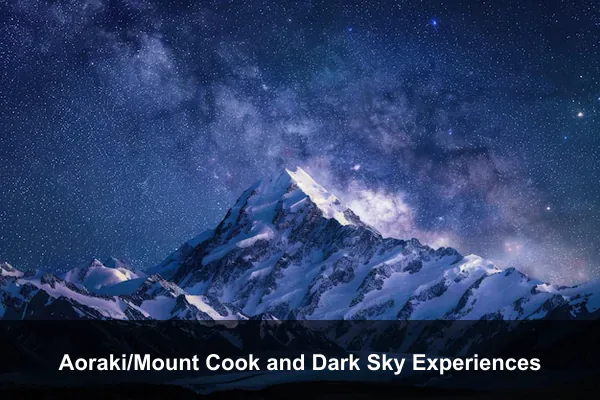
In the South Island’s Mackenzie Basin, Aoraki/Mount Cook is one of New Zealand’s top places for mountain hiking and astro tourism: spend the day on alpine valley trails like Hooker Valley and Tasman, then watch the Milky Way blaze across one of the world’s clearest dark skies after sunset. Visit November to March for the best trail conditions, while stargazing is rewarding year-round thanks to the region’s dry air and low light pollution. The easiest access is by road, about 4 hours from Christchurch or 3.5 hours from Queenstown, so a self-drive itinerary works best. Even in summer, nights turn sharply cold, so bring insulated layers for evening sky sessions.
| Best for | Mountain hiking and astro tourism |
|---|---|
| Location | Mackenzie Basin, South Island |
| Best time | November-March for trails; year-round for stargazing |
| Access | Drive from Christchurch (4 hr) or Queenstown (3.5 hr) |
Additional Info: Even summer nights are cold here, so pack insulated layers for stargazing.
Tips Before You Go
Book key elements early, especially summer ferries, Milford Sound tours, and Queenstown activities. If you plan to self-drive, remember New Zealand roads are scenic but slower than expected, so keep daily driving blocks realistic and refuel before remote stretches.
Pack for rapid weather changes in every season: layers, a waterproof shell, sun protection, and sturdy footwear. Follow local conservation rules, clean outdoor gear before crossing regions, and check DOC and MetService updates before alpine or backcountry outings.
